Naan vs Roti: Which Indian Bread Should You Order?
The curries are chosen. Someone wants rice, someone else wants bread, and the table reaches the familiar question: naan or roti?
It is worth giving the bread a little thought. You might want something soft to tear through a sauce, a simpler accompaniment to vegetables, or a garlic-flavoured side that earns its own place in the meal.
This guide explains the difference between naan and roti, how tandoori roti fits in, and how to choose from the breads on Jalsa’s North Adelaide menu without ordering by habit.
Naan vs roti: the main difference
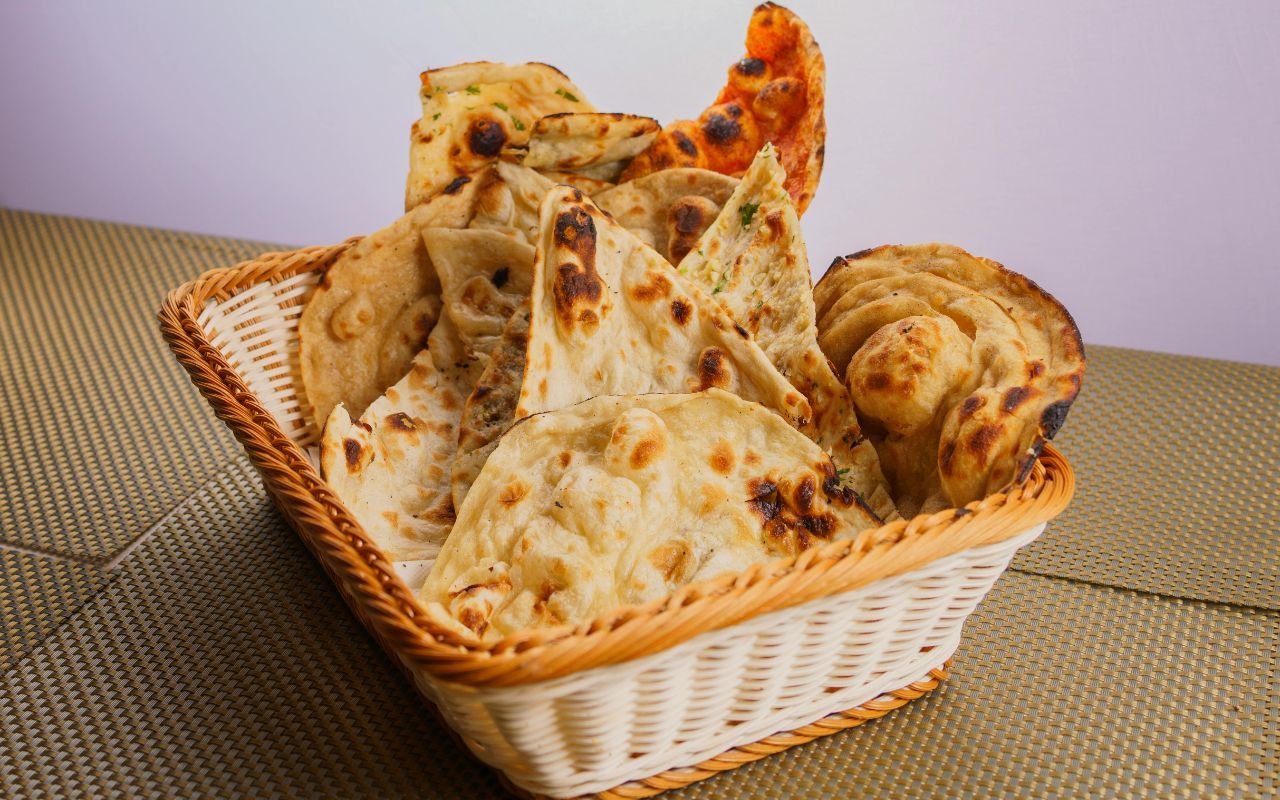
Naan is usually a leavened wheat flatbread with a soft, slightly chewy texture. Roti commonly uses wholemeal wheat flour, known as atta, and is traditionally unleavened. It tends to be thinner, with a more noticeable wheat flavour.
Those are useful starting points, not fixed rules for every kitchen. Flour blends, added ingredients, thickness and cooking methods vary. Whole-wheat naan exists, and a restaurant’s tandoori roti may differ from a home-style roti.
For a straightforward choice, think soft and pillowy for naan, or a firmer, wheat-forward bite for roti. Neither is automatically the better match for every curry.
What makes naan different?
Naan’s raised dough helps create its characteristic soft middle and uneven pockets. Many recipes use yoghurt or other dairy ingredients, although the exact dough varies. A butter topping is therefore not the only possible source of dairy.
A guide to naan from King Arthur Baking explains its traditional connection with the tandoor, the intensely heated oven used for this style of bread.
For ordering purposes, separate the bread itself from the topping or filling. Plain naan keeps the choice simple. Garlic, butter or cheese changes what you are asking the bread to contribute.
Think about the whole order before choosing. Would you enjoy the bread as a flavour of its own, or do you mainly want it to carry the curry? That distinction is often more useful than debating which version is the most impressive.
What is tandoori roti?
Roti is a broad term, and menu names deserve attention. The familiar home-style roti or chapati is often cooked on a flat pan called a tawa. Tandoori roti, as its name suggests, refers to an oven-cooked style.
That matters when comparing naan with roti in a restaurant. Both naan and tandoori roti can be associated with the tandoor; the difference is not simply that one is oven-cooked and the other is not.
Recipes also vary within the tandoori roti category. For example, Siemens’ tandoori roti recipe includes dairy ingredients. This is a useful reminder not to assume that every roti is made only with flour and water. It does not describe Jalsa’s recipe.
Start with the bread choices on Jalsa’s menu
Jalsa’s full menu lists Plain Naan, Butter Naan, Garlic Naan, Tandoori Roti and Buttered Roti. These give you a straightforward way to compare a simpler bread with a topped version.
There are other options, including Cheese Naan, Missi Roti, Lacchha Paratha, Kashmiri Naan and Jalsa Naan. The online listing does not explain every filling or dough recipe, so ask the team before choosing an unfamiliar name.
You do not need to work through the entire bread section at once. Pick the style that appeals most, then consider whether a second, contrasting bread would add something to the table. Check the menu and availability when ordering rather than relying on an old price or remembered special.
Which bread should you order with your curry?
There is no strict pairing rule. These are suggestions for building an order, not requirements for enjoying Indian food.
When the curry should lead
Start with plain naan or tandoori roti. A bread without a strongly flavoured topping is a useful choice when you want to compare two curries or keep each mouthful focused on the sauce.
For example, try plain naan alongside Butter Chicken, or tandoori roti with Channa Masala. Both curries appear on Jalsa’s menu. Choose between the breads according to the texture you enjoy rather than treating either combination as mandatory.
When you want garlic in the meal
Choose garlic naan because you enjoy garlic, not because it is the default order. It gives you another flavour to move between as you taste the dishes.
One approach is to share a garlic naan alongside a plain bread. That leaves an option for someone who wants the curry without an extra garlic topping, while still giving the garlic fans what they came for.
When bread is part of the main attraction
A cheese option may be what you are looking forward to most. In that case, order it deliberately and consider whether you still want the same amount of rice or other bread.
You do not have to add a bread to every curry individually. Plan for the table as a whole, especially when people will be tasting several dishes.
Where does paratha fit in?
Paratha is another bread style, rather than simply a different name for naan. A layered paratha is shaped to create separate folds; this lachha paratha recipe illustrates that technique.
Jalsa lists Lacchha Paratha in its bread section. It gives you another possibility when the decision is less about naan versus roti and more about trying a different texture.
For a first comparison, keep the rest of the order familiar. Choose a curry you already enjoy and change the bread. You will have a clearer sense of what you prefer than if every part of the meal is new.
How much bread should a shared table order?
There is no reliable one-bread-per-person rule. Bread size, appetite, the number of curries and the amount of rice all affect the decision. A table sharing several starters will make a different choice from a table ordering only a main course each.
Before settling the order, ask three practical questions: who actually wants bread, who is having rice, and whether everyone wants the same topping.
For two people, one plain-style bread and one flavoured option can be a starting point to discuss with the team, not a guaranteed serving recommendation. Ask about size before assuming that will be enough.
For a larger group, name the breads as they arrive so everyone knows what has been ordered. Keep any dietary enquiries separate and specific. A communal basket is convenient, but it should not replace checking which bread is suitable for a particular guest.
Ordering naan or roti for takeaway
Make the same choices at home that you would at the table: decide which bread you prefer, then consider toppings and quantities. Do not add several breads simply because they sit at the end of the online menu.
Jalsa has a takeaway menu page to consult while planning an order. Confirm the available breads and ask the team for any serving or reheating advice that applies to your order.
A useful practical habit is to have plates and the rest of the meal ready before opening everything. It is easier to divide the breads fairly when you have already decided which are shared and which have been ordered for a particular person.
For a mixed order, ask for the different breads to be identified. This is especially useful when someone has requested a particular topping or has discussed ingredients with the restaurant.
Check ingredients rather than guessing from the name
Neither ordinary naan nor ordinary wheat roti should be assumed to be gluten-free. A plain-looking bread is not automatically dairy-free or vegan, either. Dough ingredients, toppings and shared preparation all need consideration.
Tell the team about a food allergy or dietary requirement before ordering and ask about the specific bread, not only the category. Useful questions include whether it contains wheat or milk, whether a topping can be omitted, and how it is prepared alongside other foods.
Food Standards Australia New Zealand explains that allergen information for food without a label must be displayed with the food or supplied on request. Removing butter from the surface does not establish what is in the dough. Confirm suitability directly rather than using this guide as an allergen declaration.
Questions about naan and roti
Is naan always made with white flour?
No. Refined wheat flour is common, but whole-wheat naan recipes also exist. The word naan tells you the style of bread, not the exact flour blend used by a particular kitchen.
Is tandoori roti the same as plain roti?
Not necessarily. Tandoori describes the cooking style, while plain can refer to the absence of a topping. Read the menu name and ask what it means rather than assuming that every roti will have the same texture or ingredients.
Should you order rice as well as bread?
Only when both suit the meal you want. Bread and rice are not competing requirements. You might share both, choose one, or let different people choose their own accompaniment. Ask about portion sizes instead of adding a full serving of each by default.
Which bread is best for a first visit?
Plain naan is a reasonable starting point for someone looking for a soft bread without an extra topping. Tandoori roti is another option for someone curious about a wheat-forward style. Sharing both lets you make the comparison yourself without committing every diner to the same choice.
Choose your bread at Jalsa in North Adelaide
The useful answer to naan versus roti is the one that suits your order: choose the texture you enjoy, add a topping because you want it, and check ingredients whenever they matter.
Jalsa Indian Bar & Restaurant is at 153 Melbourne Street, North Adelaide SA 5006. Browse the menu, decide which breads you would like to try, and contact Jalsa for bookings or questions about your order. You can also call 0401 715 757.